


 VN
VNFire Protection for Chemical Manufacturing Facilities – Safety Solutions for High-Risk Environments
Chemical manufacturing facilities have distinct characteristics compared to standard industrial factories. During operations, businesses may simultaneously utilize flammable materials, oxidizing agents, solvents, industrial gases, or chemicals capable of reacting under incompatible conditions.

Therefore, fire protection for chemical manufacturing facilities should not be understood as merely installing a few fire extinguishers. It is a comprehensive process of building integrated solutions to detect hazards, alert personnel, control incidents, and support emergency responses tailored to the characteristics of each production area.
A fire protection plan for chemical manufacturing plants must be considered right from the design phase, based on factory functionality, manufacturing processes, types of chemicals used, and the actual conditions of the facility.
Why Do Chemical Manufacturing Plants Need Tailored Fire Protection Solutions?
Fire risks in chemical manufacturing environments can originate from various sources. Temperature, electrical equipment, chemical reactions, flammable materials, or storage incidents must all be thoroughly evaluated.
Hence, fire protection systems for chemical manufacturing plants must be developed based on the actual hazard levels rather than applying a one-size-fits-all configuration for every factory.
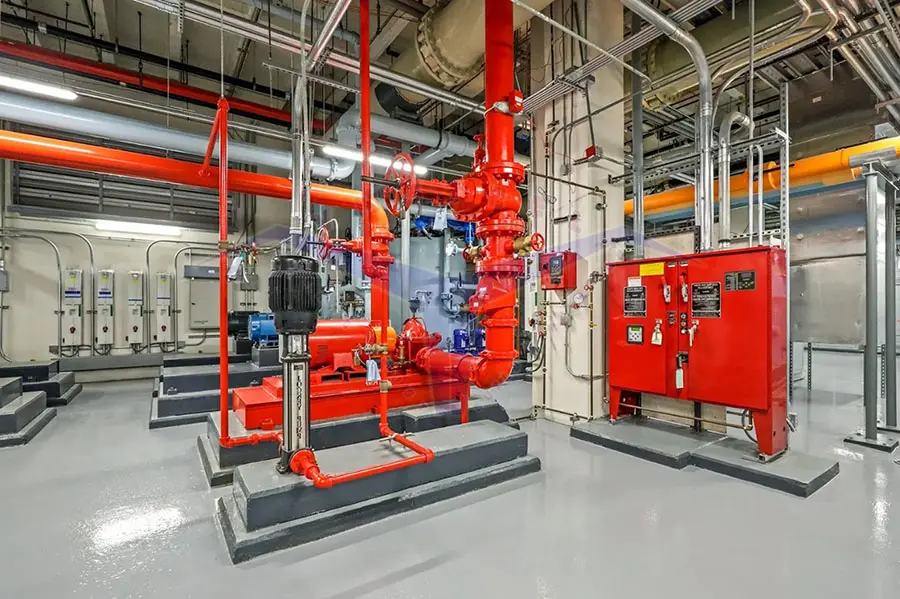
Characteristics of chemical raw materials
Each type of chemical has unique flammability, reactivity, and storage requirements. Therefore, when establishing fire protection for chemical manufacturing plants, hazard assessments must be based on the raw materials, usage processes, and actual operating conditions of the plant.
Multi-zoned production processes
A chemical plant typically consists of raw material reception areas, production lines, mixing areas, packaging zones, warehouses, and technical rooms. Each area possesses distinct operational characteristics and varying fire risk levels, meaning a uniform protection plan should not be applied across the entire facility.
Consequently, fire protection system installation for chemical manufacturing facilities must be analyzed area by area, considering everything from material properties and equipment used to storage and operational conditions. This approach ensures the selection of appropriate fire safety solutions and minimizes the risk of overlooking high-hazard spots.
Rapid incident propagation
In environments with flammable chemicals or heat sources, a minor incident can rapidly spread and affect neighboring areas if not detected and controlled promptly.
This is why fire protection systems for chemical plants must emphasize both early detection and rapid incident containment capabilities.
What Does a Chemical Plant Fire Protection System Consist Of?
The scope of fire protection for chemical manufacturing facilities depends on the scale, function, fire hazard characteristics, and design requirements of each project.
Instead of focusing solely on firefighting equipment, the system must be treated as an interconnected chain of safety solutions.
Fire detection and alarm systems
The fire alarm system is responsible for detecting abnormal signs and transmitting warning signals to the management station, giving operators valuable time to handle incidents.
In chemical manufacturing facilities, detection and alarm strategies must align with the specific characteristics of each area, environmental conditions, and production workflows. Choosing the right equipment minimizes false alarms while maximizing the overall effectiveness of the plant's fire protection system.
Fire suppression systems
Depending on the facility's characteristics and the hazard level of each zone, suitable fire suppression systems should be implemented. Selection must consider chemical types, production processes, storage conditions, and physical space layouts.
Thus, the installation of fire suppression systems for chemical manufacturing plants must be synchronized with the overall fire safety plan, ensuring that equipment is appropriately distributed across all designated hazard zones.
Fire water supply systems
Water sources and the fire main distribution network must be calculated in synchronization with the overall chemical plant design, ensuring they meet the demands of each area and the actual operational conditions.
Equipment such as pumps, piping, valves, and hydrants must be arranged logically across the site layout. The selection and installation of fire water systems for chemical plants must align with the pre-approved, designed fire protection plan.
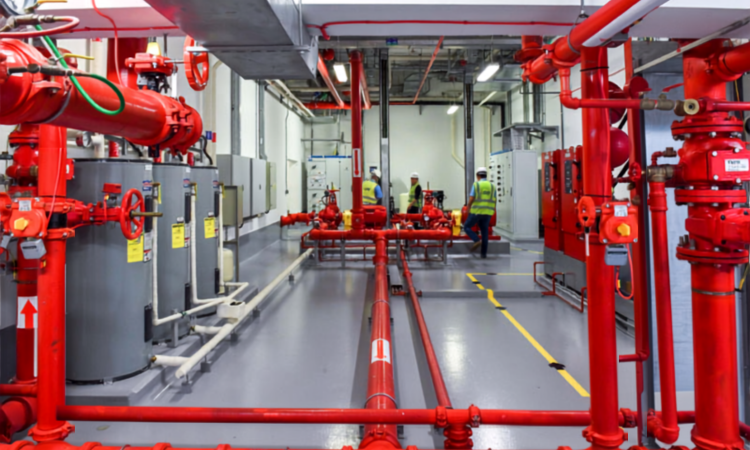
Fire Protection Design Must Strictly Align with Plant Characteristics
One of the key elements in fire protection system design for chemical plants is ensuring that the fire system is integrated with the production line.
Conducting on-site surveys helps identify high-risk zones and determine the most appropriate system layout.
Hazard zoning
Production floors, chemical warehouses, raw material yards, and utility buildings must be evaluated individually.
This hazard zoning provides a firm foundation for selecting tailored protection solutions for each specific zone during the system design phase.
Identifying ignition sources
Heat sources, electrical equipment, machinery, and other spark-generating elements must be carefully assessed during hazard analysis. This forms an essential basis for developing a chemical factory fire safety plan suited to actual operations and working conditions.
Planning access routes
Clear access routes for inspections and emergency response must also be planned. The placement of fire protection equipment must allow for easy access and operation as designated in the safety plan.
Key Areas Requiring Special Attention
In chemical facilities, different hazards exist in different zones depending on raw materials, production processes, and operating conditions. Therefore, fire protection systems for chemical plants must be built upon individual assessments of each zone, from manufacturing floors and warehouses to auxiliary facilities.
Production areas
These are typically high-density areas with machinery, materials, piping, and processes that may generate heat or trigger chemical reactions. Based on the assembly line's characteristics, potential points of fire, explosion, or incident risks must be mapped out to configure appropriate defenses.
As a result, chemical factory fire safety plans must pay close attention to production zones, ensuring fire detection and suppression systems are distributed effectively based on the physical layout.
Chemical warehouses
Warehouses stock large volumes of raw materials, active chemicals, or finished goods, requiring strict control measures. Spatial partitioning, storage configurations, ventilation, and individual chemical properties all directly influence the protection scheme.
Thus, chemical warehouse fire safety systems must be engineered based on actual material characteristics and storage conditions, rather than utilizing a generic template.
Auxiliary and technical utility areas
Electrical rooms, machinery rooms, packaging zones, technical areas, and auxiliary spaces must also be included in the evaluation scope. These sites carry inherent risks of electrical failures, mechanical breakdowns, or operational incidents.
A thorough assessment of these utility areas ensures that fire protection plans for chemical manufacturing facilities leave no blind spots, thereby facilitating a more efficient emergency response.
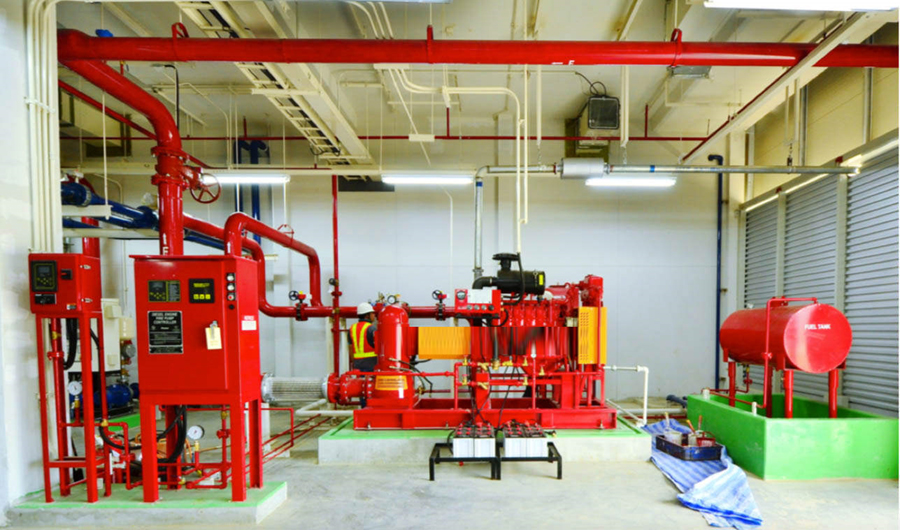
Ensuring System Synchronization During Fire System Installation
An effective fire protection system depends not only on the equipment used but also heavily on installation quality.
During the installation of chemical plant fire protection systems, piping, alarm equipment, water supplies, and associated components must be set up precisely following technical guidelines.
Logical piping layout
Fire protection piping must align with the building structure and coordinate with electrical, ventilation, plumbing, and drainage systems. Planning pipe runs in advance prevents crossovers, simplifying installation and future maintenance.
Accurate equipment placement
Detectors, control panels, suppression devices, and auxiliary parts must be installed according to the designed layout. Proper positioning ensures easy access for technicians during maintenance and emergency operations.
System integration and connectivity testing
Upon completion, all system components must be thoroughly inspected against technical specifications. Comprehensive testing helps identify wiring faults, misplaced gear, or coordination issues between systems before the plant becomes operational.
The Crucial Role of Testing and Maintenance
A fire protection system is only valuable when its equipment functions perfectly during an emergency. Therefore, chemical plant fire safety system maintenance is an essential ongoing task throughout the facility's lifecycle.
Routine check-ups help detect issues that might compromise the system, such as worn components, abnormal pipe wear, or hardware that no longer fits operational requirements.
Specifically, when the plant updates its assembly lines, adds machinery, or switches chemical inputs, the industrial fire safety plan must be audited to align with the new operational state.
Why Pre-Installation Site Surveys Are Crucial?
No single fire protection solution fits every chemical manufacturing facility. Floor area, building height, assembly setups, raw materials, warehouse facilities, and environmental conditions all impact system deployment.
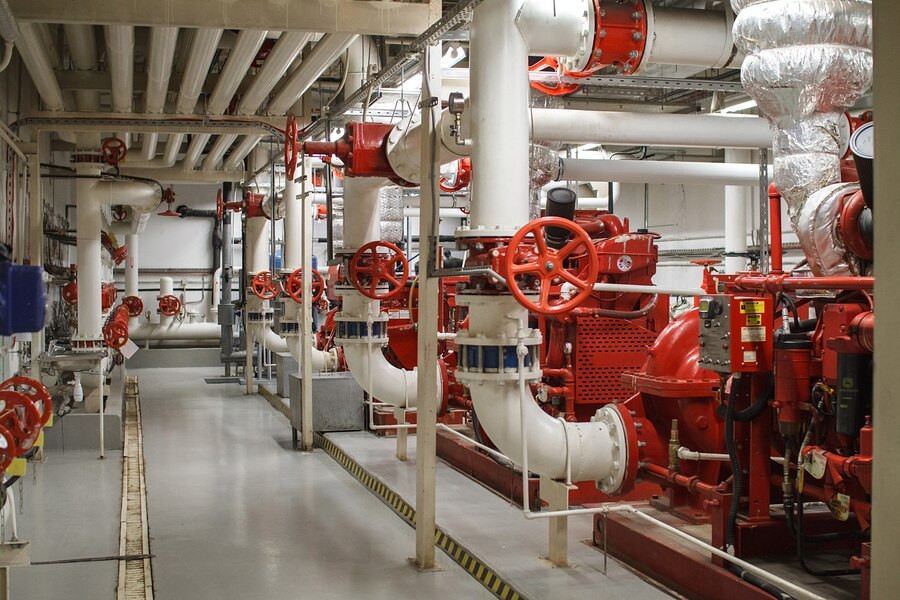
A physical site survey provides contractors with insights into:
- Site layouts and zone-specific functions.
- Placements of machinery and production lines.
- Chemical storage zones.
- Power sources and existing engineering infrastructure.
- Critical areas requiring high-priority fire risk control.
Armed with this data, the installation approach for the plant fire protection system can be tailored much closer to actual field conditions.
Chemical Plant Fire Protection Solutions with Southern Industrial Gas
The specific nature of the chemical industry demands fire protection systems tailored to the actual conditions of each plant. From production zones and warehouses to utility spaces, every area must be assessed to deploy the ideal solution.
SOUTHERN CONSTRUCTION AND INDUSTRIAL GAS CO., LTD provides fire protection systems for chemical plants, system installation, and technical engineering solutions for industrial factories and facilities.
Conducting field surveys, identifying hazards, and building integrated safety solutions form the bedrock for deploying chemical plant fire safety systems aligned with actual day-to-day operations.
Contact Information
SOUTHERN CONSTRUCTION AND INDUSTRIAL GAS CO., LTD
Address: 675B Quang Hoa Xuong, Lai Thieu Ward, Ho Chi Minh City
Hotline: 0869.870.870
Phone: 0869.870.870
Email: giaogasbinhduong@gmail.com
Website: https://thiconghethonggas.com/